Red viruses in Agario: how mother cells work and how to use them
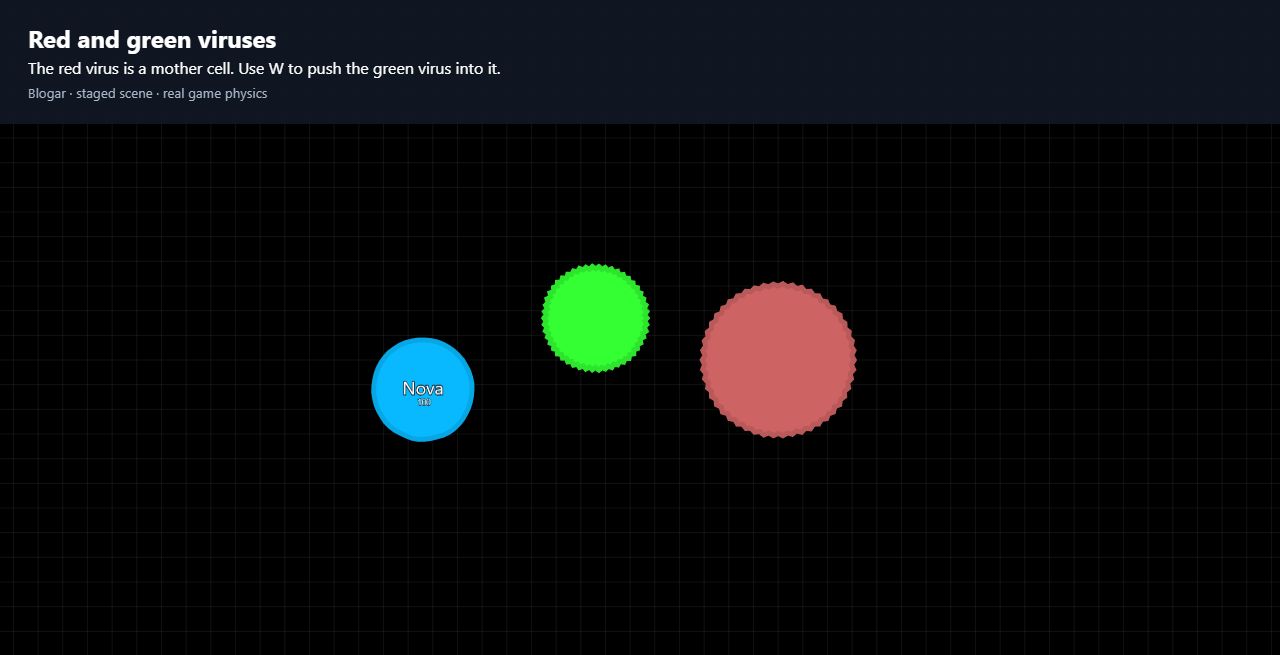
Red viruses in Agario – Blogar are mother cells. They consume sufficiently small player cells, green viruses and ejected mass, then gradually turn the stored mass into colourful food pellets. A red virus can help you grow, but a careless approach can cost you a cell or leave you split into vulnerable pieces.
You can push a green virus into a red one. Position yourself on the opposite side of the green virus and fire mass into it with W. This guide explains the setup, shows the result and covers safe food collection. These rules describe Blogar’s Experimental arena; other Agar.io versions may handle viruses differently.
How red viruses work in Agario
A red virus, also called a mother cell, stores mass. Eating a green virus, a small player cell or a W pellet increases that reserve. It then releases colourful food around its edge and shrinks back towards its normal size.
- Small cells should keep their distance. A mother cell can eat them when they are small enough and move sufficiently far inside its area.
- Green viruses become food. Push a green virus towards the red one and food appears after it is consumed.
- Ejected mass is processed too. W feeds a mother cell: it grows and releases food rather than flying forwards.
- A large cell can eat the mother cell itself. This can trigger virus splitting, so check your number of parts and nearby opponents first.
In Blogar, a red virus does not create unlimited food from nothing. It releases mass stored above its minimum size. If nobody has fed it and its reserve is empty, waiting beside it will not produce another stream of food.
How to push a green virus into a red virus with W
On Blogar’s Experimental arena, hitting a green virus with ejected mass pushes it in the direction of the hit. You can use this to clear your route and generate food at a nearby mother cell.
- Find a suitable pair. The green virus must be close enough to the red one for the push to reach its eating area. There should be no player between them who could eat the green virus first.
- Line up the shot. The order should be your cell → green virus → red virus. Fire from the side of the green virus opposite the mother cell.
- Aim through the green virus towards the red one. Tap W. The pellet must hit the green virus; a miss may simply feed the mother cell or another player.
- Watch the path. If the green virus misses, change your angle. If it stops short, adjust your position and fire another short shot. Holding W wastes extra mass.
- Wait for it to be eaten, then collect the food. Approach the colourful pellets from outside the mother cell and leave a safe gap.
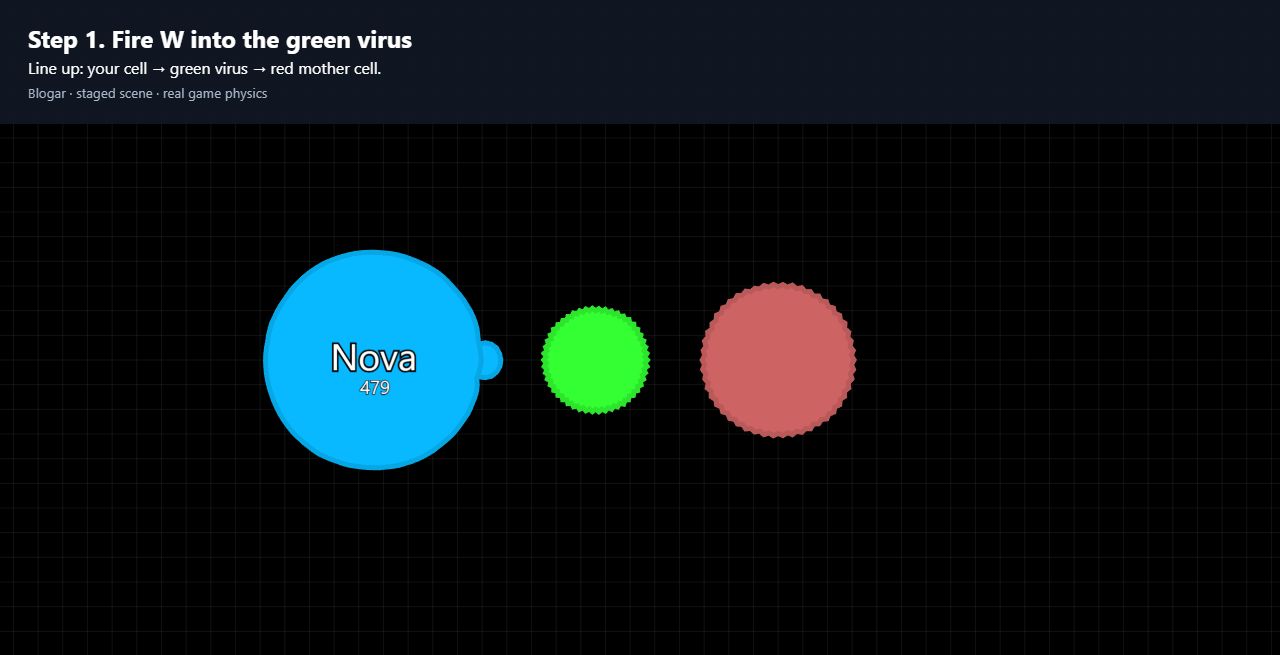
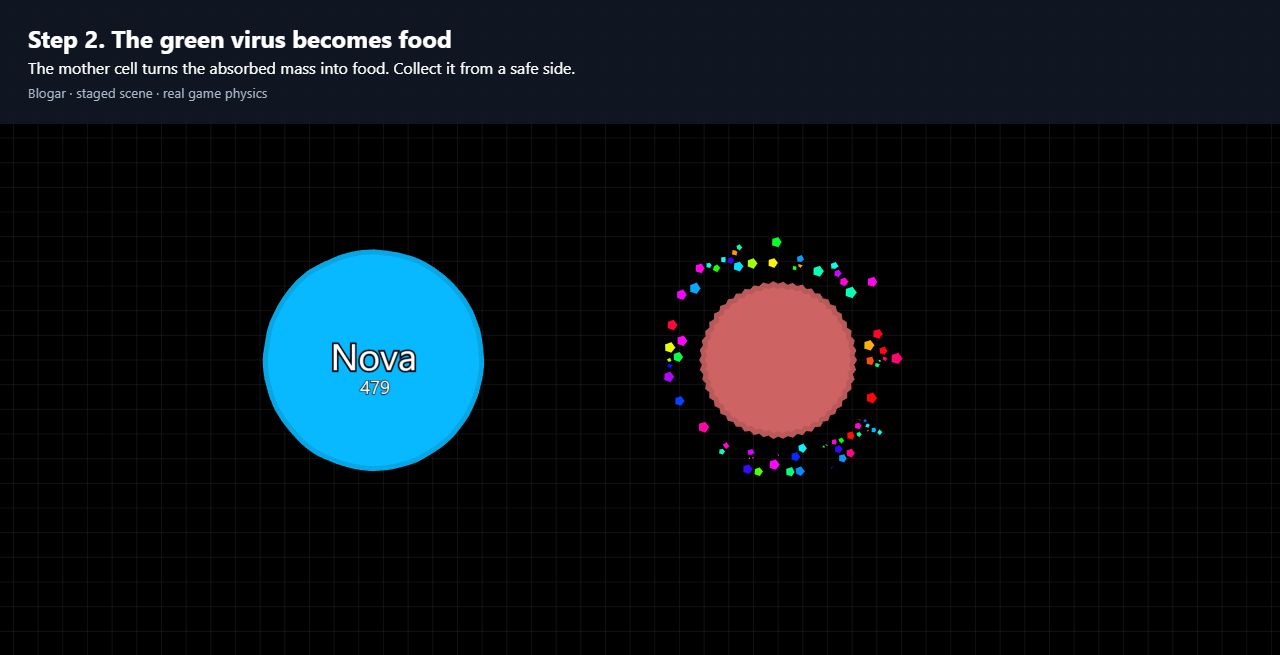
Check what is behind the green virus. A poor angle can send it into another one of your cells, a teammate or a larger opponent. Look along the whole firing line before shooting.
How to collect mass efficiently around red viruses
A practical way to grow is to process a nearby green virus and collect its mass as small food pellets. You spend W on the push without having to eat the green virus with a large cell and split. Whether the move pays off depends on how much food you actually collect.
- Check opponents first. Do not spend mass creating food for somebody else’s large cell.
- Choose your collection side in advance. Leave open space behind you for an escape instead of trapping yourself against the border.
- Move around the mother cell in an arc. Collect food from outside and do not cut through the centre. Feeding can make the mother cell larger, turning a previously safe gap into a dangerous one.
- Check every part after splitting. A large total mass does not protect an individual small fragment from being eaten.
- Avoid unnecessary shots. Once the push works, collect the food. Constant W shrinks your cell and helps competitors.
A mother cell is useful for controlled growth, but defending one spot at any cost is rarely helpful. If another player blocks your escape or takes the food, move to a different pair of viruses.
What happens when you feed a red virus directly?
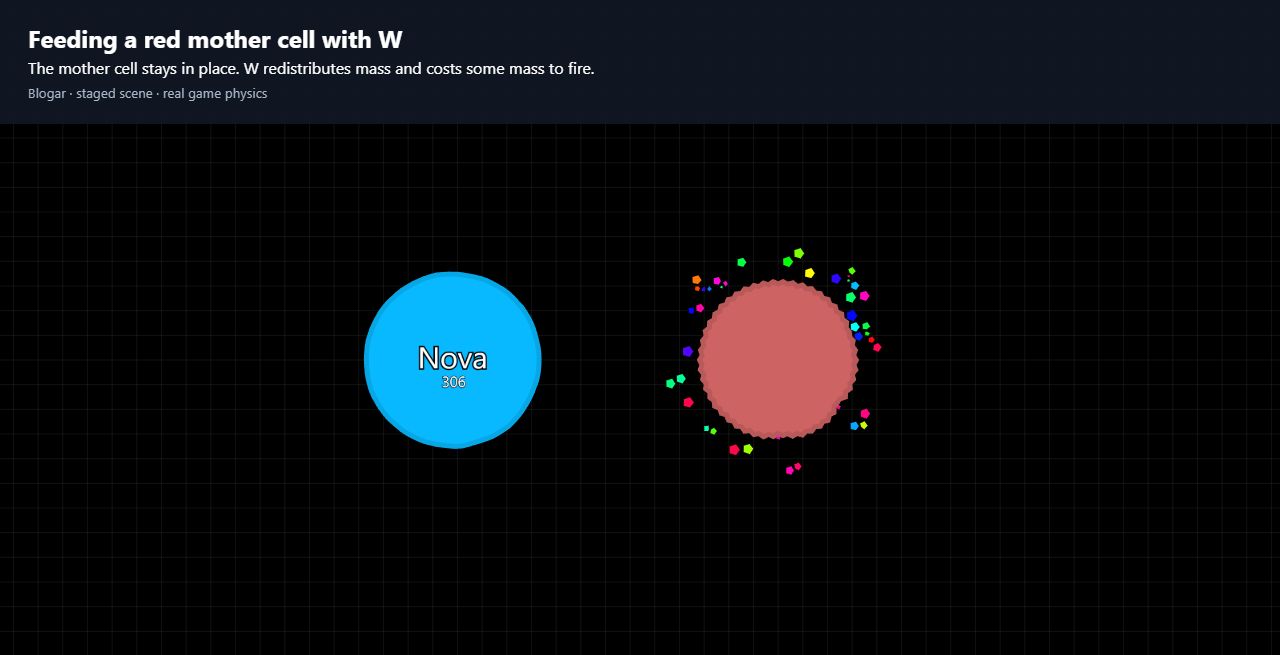
Firing W straight into a mother cell increases its reserve. It stays in place and gradually converts the received mass into food. This can provide food for a teammate, but feeding it your own mass is not an unlimited growth loop.
Each W shot removes more mass from your cell than its pellet contains. The mother cell processes what reaches it; it does not refund the cost of firing. Even collecting every resulting pellet does not turn this cycle into free mass, and other players may take some of the food.
Why does a red virus eat or split a player?
The mother cell can eat a small player cell. That fragment’s mass enters its reserve. Losing one fragment does not necessarily end your game if you have other cells left.
A sufficiently large individual cell eats the mother cell instead. It gains the mother cell’s mass but can split into fragments under the virus rules. In the screenshot, one large cell becomes 16 parts. This is one staged example: the result depends on starting mass, existing parts and available slots for new fragments.
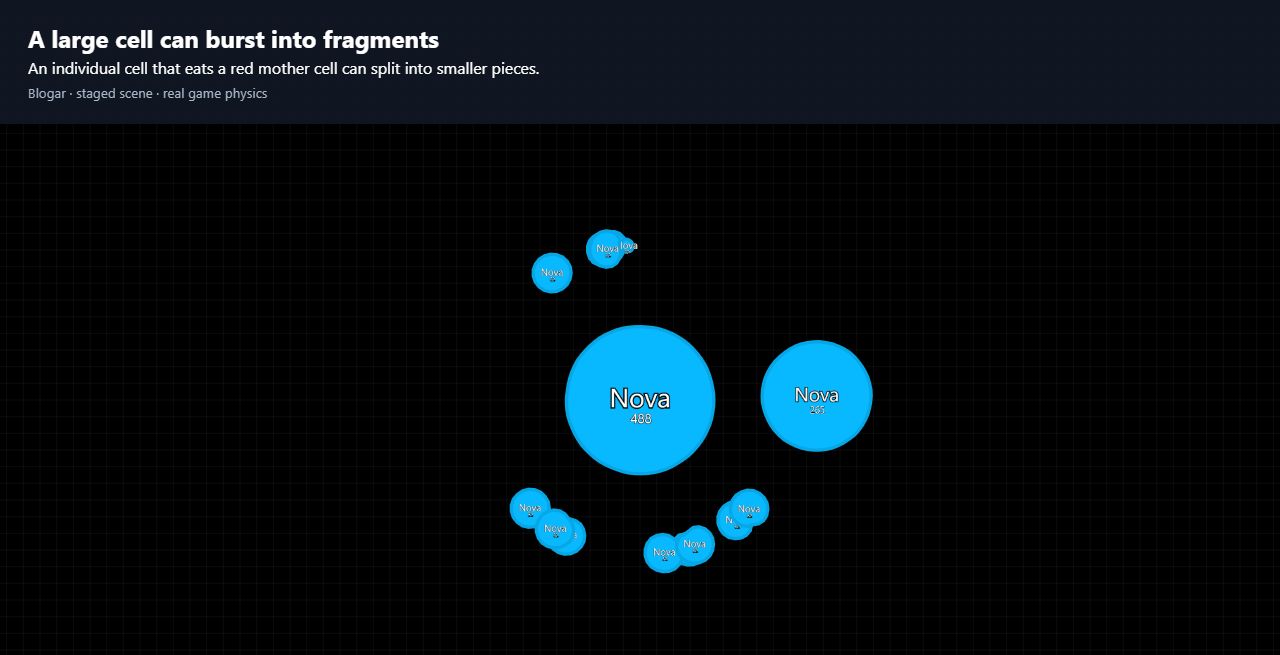
No new fragments appear if you have already reached the part limit. That does not make every approach safe: the mother cell can still eat small parts and an opponent can intercept your mass. Judge the individual cell touching the virus, rather than just your total mass.
How to use a red virus against an opponent
Limit convenient escape routes. A mother cell beside or behind an opponent makes retreating and collecting small fragments harder. Control the open side while keeping your own exit. Its presence alone does not guarantee the opponent will hit it.
Punish careless splits. An enemy may be larger in total, yet have small fragments that are vulnerable beside the mother cell. You do not always need to chase them: the danger can force a route change and leave food open for you.
Collect after a burst without giving away your own cell. If an opponent eats a mother cell and splits, check which pieces you can capture and whether another large player is nearby. Splitting blindly into the middle can make you the next target.
For a different virus move, read how to popsplit in Agario. It covers the approach, split timing and capture after the burst. This red-virus guide does not replace practising popsplits by a green virus.
Common mistakes around red viruses
- Moving a small part too close. Collect the outer pellets instead of trying to pass through the mother cell.
- Aiming W from the wrong side. The green virus should sit between you and the red one. A side-on shot pushes sideways.
- Constantly feeding your own mass for growth. W costs mass; there is no free cycle.
- Missing a change in size. The mother cell grows after a meal, so increase your distance.
- Eating a mother cell next to a stronger player. Your gain can disappear along with the scattered pieces.
Frequently asked questions
What are red viruses called in Agario?
In Blogar, they are mother cells. They absorb mass and release colourful food around themselves.
Can you push a green virus into a red one?
Yes. Stand on the opposite side of the green virus and shoot it with W. With the right distance and angle, it reaches the mother cell and becomes food.
Can W push a red virus?
In Blogar, a direct W hit feeds the mother cell but does not push it. Green viruses react differently on the Experimental arena and receive a push.
Why did the red virus stop producing food?
It may have exhausted the reserve above its minimum size. Eating another suitable cell, green virus or W pellet replenishes that reserve.
Why was I eaten even though my total mass was large?
The size check applies to the individual fragment entering the mother cell. A small part can be eaten even if your other cells are very large.
Should I deliberately eat mother cells to grow?
It can add mass, but you must judge the burst and nearby opponents. For safer food collection, first try pushing a green virus into the mother cell and collecting from outside.
Before approaching, check three things: who will collect the food, which of your parts will touch the mother cell and where you can escape. See the game and controls guide for the basics, or browse more Agario guides.